
Wargaming Is Vulnerability Operationalized
In the military, we don’t fall in love with plans. We try to kill them through analysis so they don’t kill us in execution.

“No plan survives first contact with the enemy.”
— Helmuth von Moltke the Elder, Chief of Staff of the Prussian Army, 1857-1888
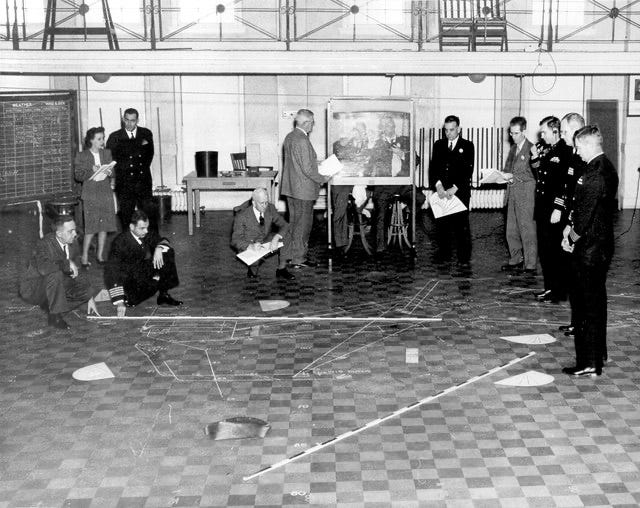
As we approach the four-year anniversary of the Russian invasion of Ukraine (February 24th), a vital step in the military decision-making process that most civilians have never heard of, but is the most important action of all, warrants discussion: wargaming. This is the disciplined analysis of a proposed course of action against a thinking enemy. One team plays “us,” another plays the opposing force. A neutral facilitator moderates. During wargaming assumptions are challenged, resources are measured, force levels are adjusted, and casualties, time, risk, and second- and third-order effects are examined. The goal here is not to prove the plan works; no, the goal is to expose where it breaks.
During my 33 years in uniform serving the U.S. Army, I was a devoted practitioner of the process. Later, at Target, I brought the same rigor to strategy sessions with my team. Recently, for about four years, I coached U.S. Army brigade combat team commanders—colonels—and their staffs on decision-making. Without exception, the hardest step for them was wargaming. It is uncomfortable. It consumes that most valuable resource, time. It forces you to sit quietly while your staff dissects your preferred course of action. It requires subject-matter experts to challenge assumptions in front of peers. It demands that a commander say, in effect, “Show me where this fails.” That is not timid leadership or indecisiveness—it is disciplined humility. It is vulnerability operationalized.
Wargaming does not exist to embarrass leaders. It exists to protect soldiers—and organizations—from the consequences of untested optimism, even arrogance. A strong commander welcomes—demands—the scrutiny. An insecure one shuts it down. A vulnerable leader understands that dissent in rehearsal is loyalty in disguise. The most dangerous words in any planning session are, “It’ll probably be fine,” or “That should work.” In wargaming, “probably” and “should” are not good enough. We build branch plans for when things go wrong. We build sequels for what happens next. And if a course of action collapses under critical analysis—if it proves too risky, too costly, or is misaligned with higher intent—we discard it and begin planning anew.
Which brings us back to Russia’s invasion of Ukraine. The early days of the war revealed a stunning series of flawed assumptions: that Kyiv would fall quickly, that Ukrainian resistance would crumble, that Western unity would fracture, that logistics would keep pace with ambition. Instead, Russian columns stalled. Supply lines faltered. Morale eroded. The Ukrainian government did not crumble; it galvanized. Whatever political lens one brings to the conflict, it is difficult to look at the initial campaign design and conclude that it had been thoroughly wargamed against a capable and determined adversary. It appears to have been built on smug optimism rather than disciplined red-teaming.
Authoritarian systems, by their nature, often suppress the very dissent that makes efforts like wargaming effective. When leaders surround themselves with sycophantic affirmers instead of dedicated challengers, reality eventually provides the correction.
This is not just a military lesson. It is a leadership lesson. In boardrooms, in city councils, on nonprofit boards, and yes, in corporate headquarters, leaders propose strategies every day that deserve to be stress-tested by people empowered to say, “Have you considered this?” or “That won’t work and here’s why.” A vulnerable leader invites that scrutiny. They do not equate critique with disloyalty. They understand that the cost of wounded ego is far less than the cost of failed execution.
Wargaming is not about anticipating every contingency; it is about cultivating a culture where hard questions are welcome before consequences are irreversible. In the end, vulnerability is the courage to rehearse failure so that others do not have to endure it.