
Herding
Leadership isn't about getting ahead—it's about making sure no one gets left behind.

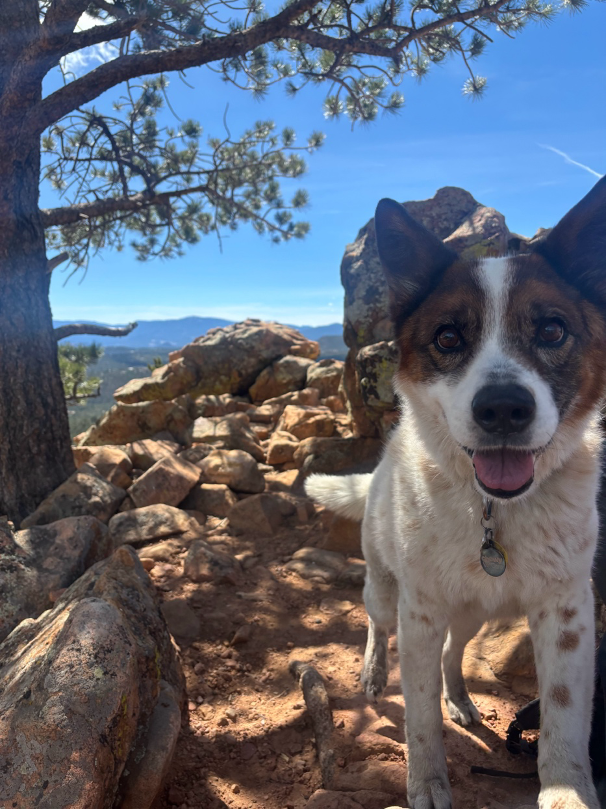
Another blog tied to a delightful hiking experience here in Colorado…My wife and I went hiking recently in the mountains with our son, his girlfriend, and her Australian cattle dog, Ruby. As is often the case, Kim and I gradually drifted behind the younger couple. We hike regularly, but at our stage of life we’re content to enjoy the journey at a slightly slower pace! Every few minutes, Ruby, up ahead, would leave the two of them and trot back down the trail to check on my wife and me. She’d pause just long enough to make sure we were still coming along, and then happily dash on ahead to her owner. She repeated this little ritual throughout the hike, never seeming anxious or impatient—just quietly making sure her “herd” stayed together.
Australian cattle dogs are bred to watch over a herd. Their instinct isn’t simply to move cattle from one place to another, but to notice when one has fallen behind and to bring the group back together. Watching Ruby’s behavior on that hike made me think about how much we humans have lost some of that instinct. Our culture invariably celebrates those getting ahead, being first, climbing faster, achieving more, standing out. Yet the strongest families, organizations, and communities aren’t defined by how quickly their leaders reach the summit. They’re defined by whether someone notices when another person is struggling to keep up.
Ruby’s actions also reminded me of someone else. My mother’s first cousin, Jack, recently celebrated his eighty-ninth birthday. He’s the last surviving member on my mom’s side of my family and lives in Buffalo, New York, where he’s lived his whole life. I make it a point to call him regularly and visit whenever I can. Not because he asks me to. Not because I feel obligated. I do it because I care. As we grow older, the circle around us becomes smaller. Friends pass away. Family members move. Mobility declines. Loneliness quietly creeps in. Sometimes the greatest gift we can offer another person isn’t advice or assistance—it’s simply letting them know they haven’t been forgotten.
To me, that’s one of the purest expressions of vulnerability. We often think vulnerability means having the courage to ask for help, and it certainly can. But vulnerability also means developing the awareness to notice when someone else may need encouragement before they ask for it. Most people who are hurting don’t announce it. They simply grow quieter. They fall a little farther behind. They begin to feel invisible. Vulnerable leaders, friends, spouses, neighbors, and family members cultivate the habit of looking back—not to judge how far others have fallen behind, but to make sure they know someone is waiting for them.
Finishing our hike, Ruby once again bounded back toward us before rejoining our son and his girlfriend. She wasn’t looking for praise. She was simply doing what came naturally. If only caring for one another came just as naturally to the rest of us. In the military, we often spoke about leaving no soldier behind. That’s a worthy—and necessary—principle on the battlefield, and it’s just as important in everyday life. Whether it’s a coworker who’s unusually quiet, a neighbor you haven’t seen in a while, an aging relative living alone, or a friend carrying a burden they haven’t shared, maybe the most meaningful thing we can do is occasionally look over our shoulder, circle back, and make sure everyone is still part of the journey. Leadership, after all, isn’t measured by how far ahead we are. It’s measured by how often we care enough to check on those bringing up the rear.
In the end, maybe we’re all called to do a little herding.